Guide · symptom
A gas burner that clicks but will not light, and you smell no gas
Spark without fuel: the safe order for checking the shutoff valve, propane, burner caps and igniters, and how to tell a harmless smell from a real leak.
Published Oct 11, 2026 · Updated Oct 11, 2026
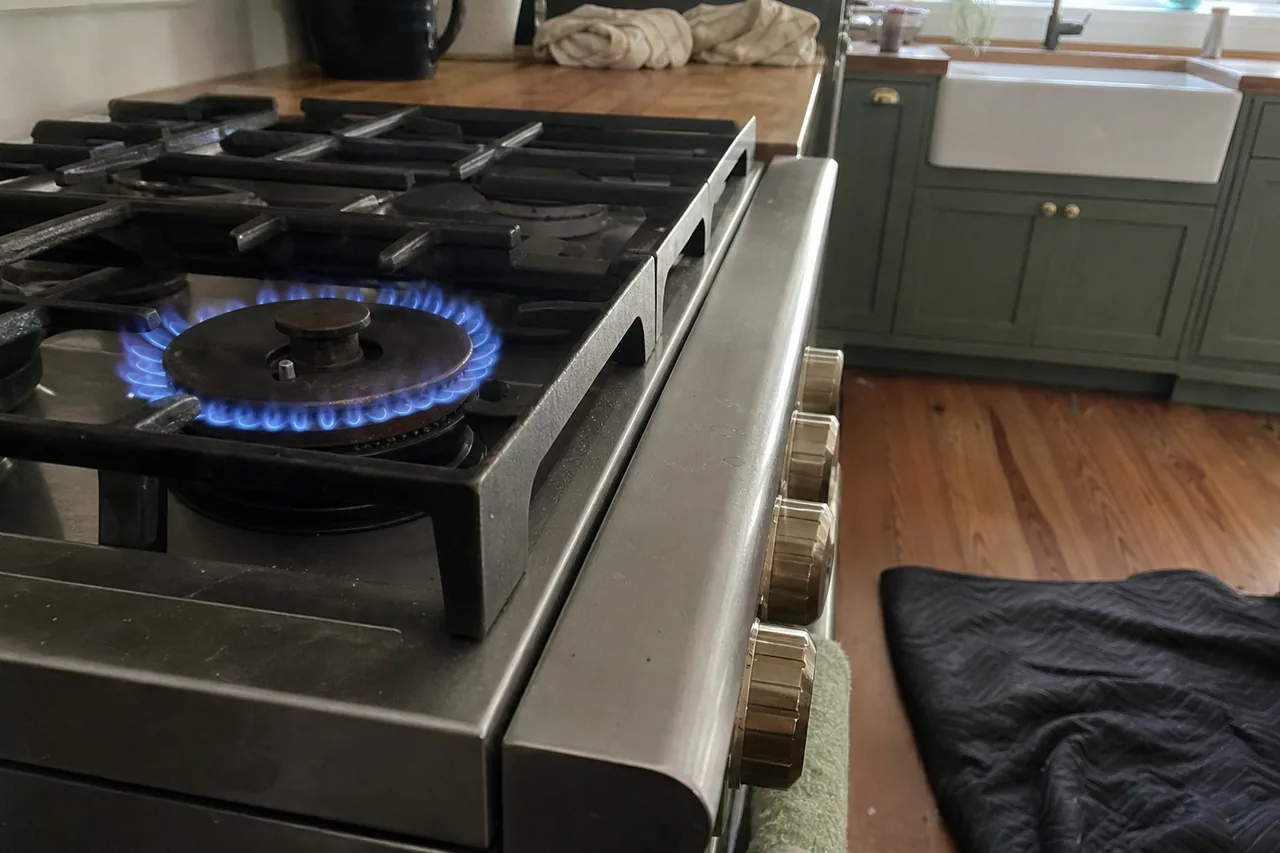
When a burner clicks but no flame appears and you smell nothing, the spark side is doing its job and the fuel side is not: gas is either failing to reach that burner or arriving in too small an amount to catch. The quickest way to tell is to try a second burner. If none of them light, the cause is upstream, at the shutoff valve behind the range, the meter or the propane tank. If only one stays dark, the fault sits at that burner. Treat the lack of smell as a clue, never as proof that the kitchen is free of gas.
Gas safety comes before the burner
If at any point you do notice the sulfur, rotten-egg odor that suppliers add to fuel gas, stop troubleshooting at once. The National Fire Protection Association keeps its advice short. Get everyone out of the house straight away, put out any open flame on the way if you safely can, and leave lights, appliances and phones untouched while you are still inside, since a switch or a ringing handset can throw a spark. Make the call to 911 or your gas company only once you are well clear of the building, and stay out until they tell you it is safe.
A quiet stove does not cancel that advice. Fire researchers call it smell fatigue: after a minute or two around the odorant, many people simply stop registering it. A fuel gas alarm removes the guesswork. Under NFPA 715 they belong close to gas appliances and just outside sleeping rooms, and they are built to alarm when gas reaches 10 percent or less of the lower explosive limit, far short of a mixture that could ignite.
Smells that are not a leak
Plenty of kitchen odors have nothing to do with gas. A brand-new range gives off a hot, oily smell during its first few uses while protective coatings and insulation binders cook away; run it empty with a window open and the smell fades. Boil-over on a burner base, or grease on the oven floor, smokes and smells scorched. A faint puff right as a burner catches is normal too, because a little fuel escapes in the instant before ignition. A genuine leak behaves differently. The odor lingers with every knob off, grows stronger near the range or the meter, or comes with a hiss.
Working out where the gas stopped
Once you are sure the house is safe, narrow it down:
- Nothing lights, oven included. Find the shutoff valve on the gas line behind or beside the range and confirm it is open. If the water heater, fireplace or dryer has also stopped, the trouble is at the meter or tank, and the gas company is the right call.
- Your home runs on propane. Read the tank gauge. Thermador ranges arrive configured for natural gas, a propane conversion is work for a qualified technician, and the tank needs its own high-pressure regulator besides the one packed with the range. A range recently converted or moved deserves a professional look.
- One burner stays dark. Thermador’s use-and-care guide for Pro Grand and Pro Harmony ranges says to check that the cap sits properly on its base. Lift it, clear any food from the ports, and reseat it so it lies flat without rocking. Treat the ceramic igniter gently: a cotton bud moistened with a little dish soap and water lifts grime, while metal tools such as a knife or pin can crack it. Let everything dry before trying again.
If a burner fails to catch within a few seconds, turn the knob off and give the gas several minutes to clear before another attempt.
What a repair visit checks
A technician picks up where your checks ended. Joints and valves are leak-tested first, then the supply pressure at the range is measured and the regulator inspected, and the setup is confirmed to match the gas your house actually uses. After that comes ignition: spark strength at each electrode, the condition of every igniter, the spark switches and module, and whether each burner valve opens fully. Our range and rangetop service covers Nocatee kitchens from Twenty Mile to Del Webb Nocatee. The diagnostic is $80, and replacing an igniter, spark module or similar ignition part typically falls in the $200–$490 range, with the firm figure given once the fault is found. The pricing page explains how a visit is billed.